
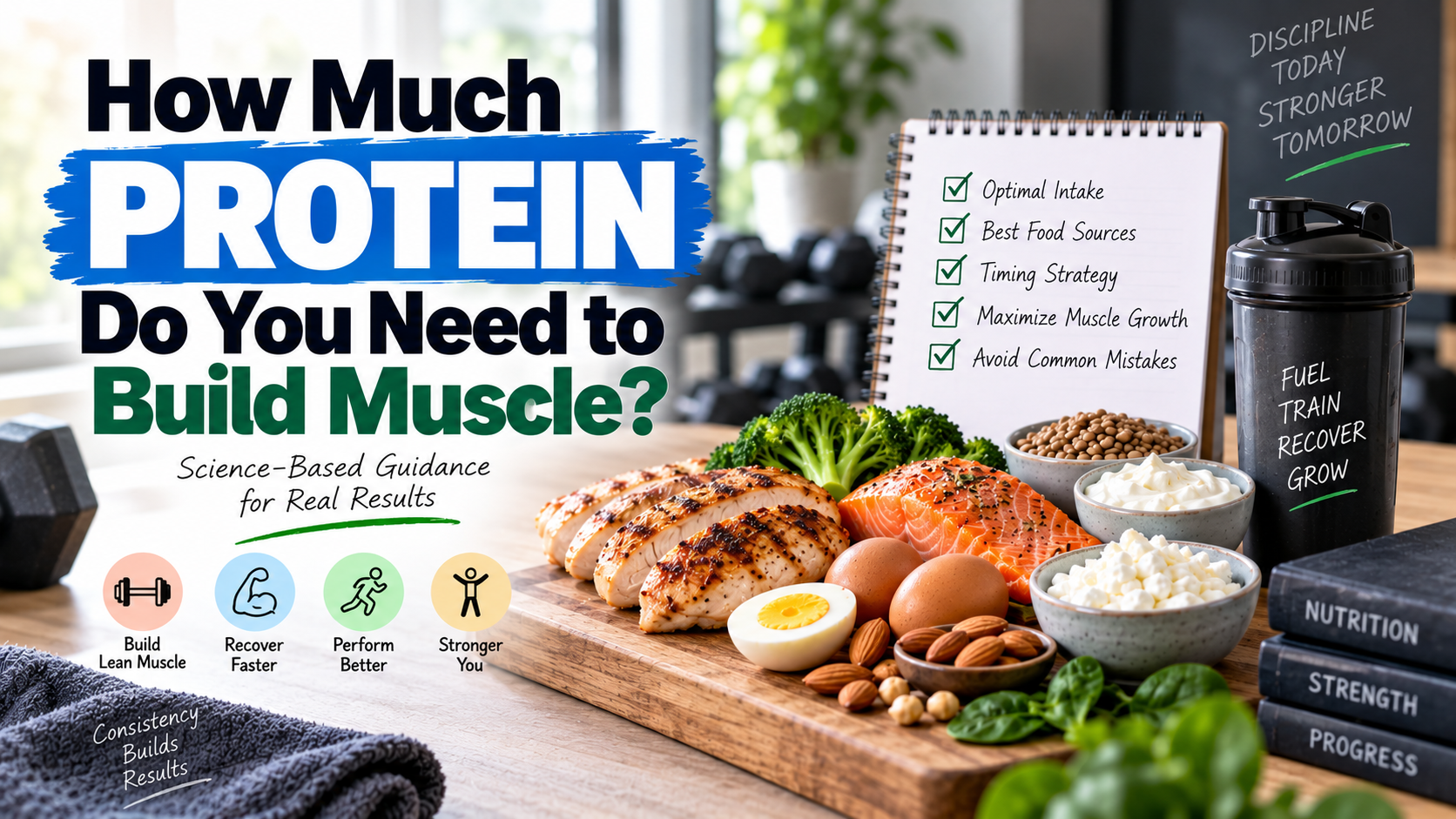
Protein to build muscle is not a mystery powder — it is a daily total that supports repair after training. If you bench press hard and eat like a sparrow, progress stalls. If you eat protein but never add weight or reps, the same thing happens.
The hypertrophy range
Sports nutrition literature commonly supports roughly 1.6–2.2 g/kg/day for people gaining muscle. Going higher is usually unnecessary unless preference or extreme leanness demands it.
Next step: Sketch your daily grams with the protein calculator.
Calories still decide the “building” part
Protein is the brick delivery. Calories are whether you have a construction budget. A small surplus (about 200–300 kcal above maintenance) helps intermediates gain with less fat. Beginners can sometimes gain on maintenance if they are new to lifting (“newbie gains”), but chronic under-eating still caps results.
Sample day (~140 g protein, Indian-leaning)
| Meal | Idea | Protein (approx.) |
|---|---|---|
| Breakfast | 3 eggs + veggies + 1 roti | 20–25 g |
| Lunch | Dal, rice/roti, curd, salad | 30–35 g |
| Snack | Hung curd / whey / peanuts measured | 20–25 g |
| Dinner | Paneer or chicken + vegetables | 40–45 g |
Training link you cannot skip
Progressive overload — more reps, load, or better quality over time — tells muscle to grow. Protein feeds that signal. Sleep 7–9 hours when you can; chronically sleeping five hours fights your groceries.
Key takeaways
- 1.6–2.2 g/kg covers most muscle-building phases.
- Hit protein and train progressively.
- A small calorie surplus helps after the beginner phase.
- Supplements are optional convenience.
See muscle building hub and how long muscle takes. This is educational information, not medical advice. Consult a qualified professional for personal health decisions.