
Nutrition guide: healthy eating for Indian diets
Clear, evidence-informed answers on calories, protein, carbs, fats and hydration, built around the food people in India actually eat, with calculators whenever you need a number.
Nutrition basics in four steps
Calories set the direction
Eating more than you burn leads to weight gain, less leads to weight loss, regardless of which foods the calories come from. Start with the calorie calculator or the TDEE calculator to find your maintenance level.
Protein protects muscle
The Indian RDA for sedentary adults is about 0.8 g of protein per kg of body weight; active people and lifters benefit from more, roughly 1.2–2.2 g/kg. Read how much protein you need per day or go straight to the protein calculator.
Carbs and fats fill the rest
Once calories and protein are set, split the remainder between carbs and fats to suit your taste and training. The macro calculator does the maths. Cooking fats count too: our guide asks is ghee good for you.
Water, fibre and micronutrients
Vegetables, fruit, pulses and whole grains supply fibre, vitamins and minerals that calorie counts miss. Hydration needs vary with heat and activity; see how much water you should drink a day or use the water intake calculator.
Explore nutrition pathways
Focus a card — then open the hub, calculator, or food database.
Building a healthy Indian plate
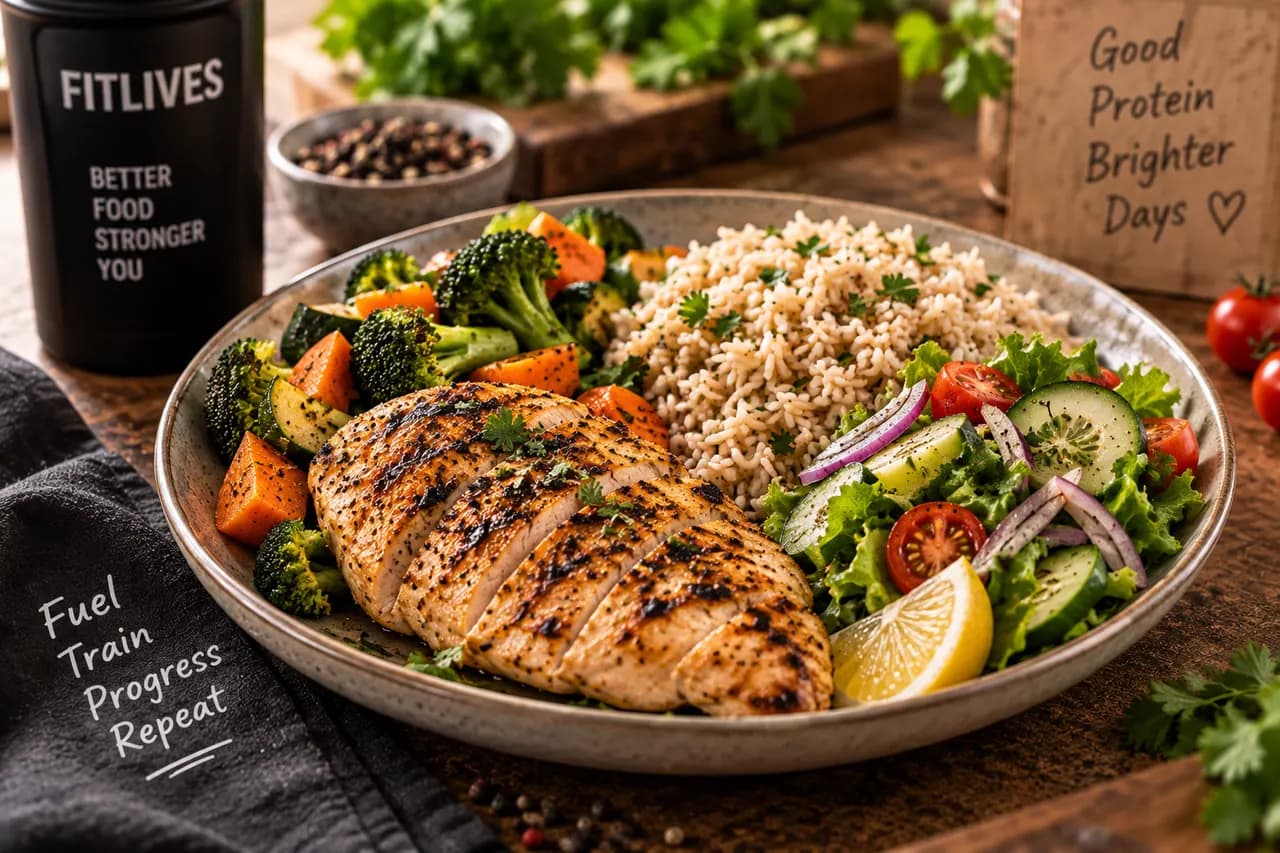
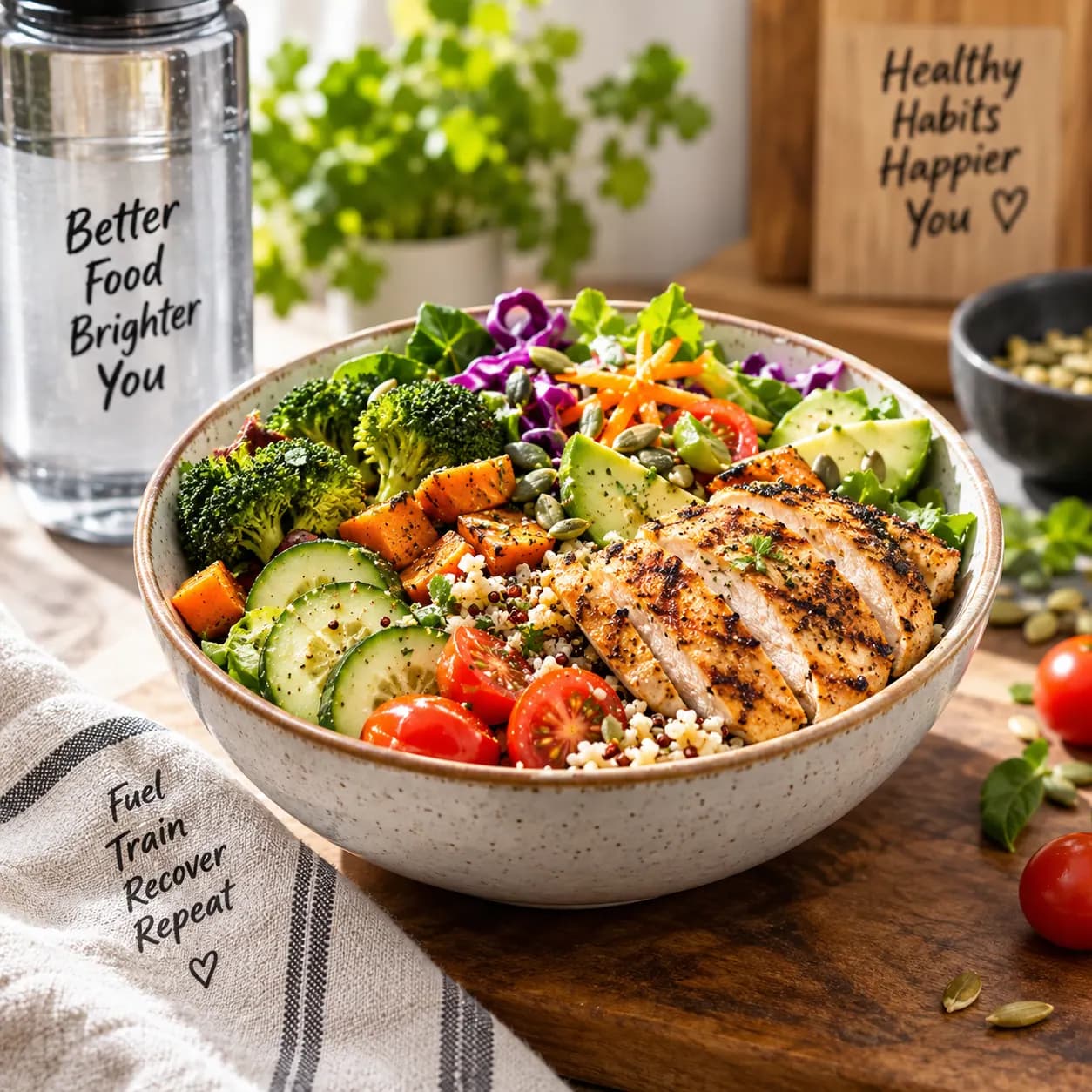
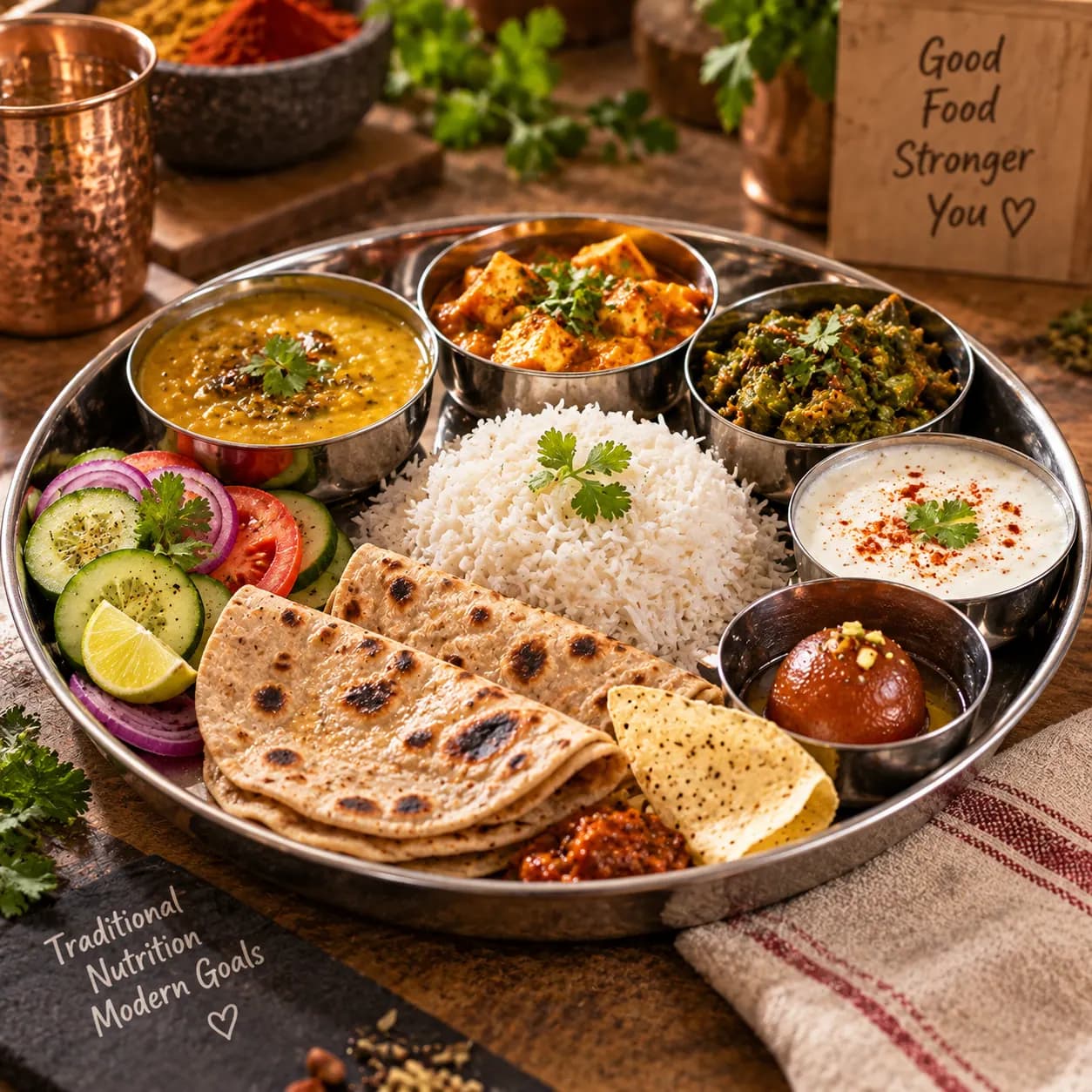
Most Indian meals are carb-heavy and protein-light. A simple fix is to fill about half the plate with vegetables or salad, a quarter with a protein source (dal, paneer, curd, eggs, chicken or fish) and a quarter with roti, rice or millets. Measure oil and ghee rather than pouring them; they are the easiest calories to over-eat.
For exact numbers, look foods up in the Indian food calorie database, or compare common staples in best high-protein Indian foods. If you train, our guide on protein before or after a workout covers meal timing.
All nutrition guides
Every fitlives nutrition article, grouped by topic. Each one answers a single question in depth, with sources.
Protein
- Is Too Much Protein Bad for Your Kidneys?
- Protein for Beginners: What It Is & How Much You Need
- Soya Chunks Protein: Per 100 g, Per Serving & Safety
- High-Protein Vegetarian Indian Breakfast: 10 Ideas
- Is Whey Protein Safe? Side Effects, Kidney and Liver Myths, and How to Spot Fake Whey in India
- Best High Protein Indian Foods
- 2 Eggs Calories and Protein
- 100g Paneer Calories and Protein
- 100g Chicken Breast Calories and Protein
- How Much Protein Do You Need Per Day?
Core topics
Nutrition FAQs
Quick answers from this guide. Educational information only — not medical advice.
A balanced Indian plate has a measured portion of grains (roti, rice, millets), a clear protein source (dal, paneer, curd, eggs, chicken or fish), plenty of vegetables, and a modest amount of oil or ghee. Adjust portions to your calorie needs and goal.
It depends on your size, age, sex and activity. Many adults fall somewhere between about 1,600 and 2,800 kcal a day. Use a calorie or TDEE calculator for a personal estimate, then adjust based on how your weight changes over a few weeks.
It takes planning rather than special foods. Dal and roti alone are usually not enough for active people, so add paneer, curd or Greek yogurt, milk, soya chunks, tofu or chana to most meals.
Neither is bad in itself. Total calories, food quality and portion sizes matter far more. Most people do well getting roughly 45–65% of calories from carbs and 20–35% from fat, adjusted to preference and activity.
Still have a question? Contact us.
Educational information only. If you have a medical condition, are pregnant, or take medication, talk to a doctor or registered dietitian before changing your diet. See our medical disclaimer.