What your body needs after training
A workout breaks down muscle protein and uses up stored carbohydrate (glycogen). After training, protein provides the building blocks to repair and grow muscle, and carbohydrates help refill energy stores — which matters most if you train again within a day.
Does the 'anabolic window' matter?
The old advice to drink a shake within 30 minutes is too strict. Research shows the window for benefiting from protein is much wider — several hours around your workout. If you ate a protein-containing meal 2–3 hours before training, there's no rush. If you trained fasted early in the morning, eat sooner.
Your total protein intake across the day matters far more than precise timing. See protein before or after a workout.
How much protein after a workout
Aim for about 0.25–0.4 g of protein per kg of body weight in the meal — roughly 20–40 g for most people. Larger people and those over about 40–50 may benefit from the higher end. Your daily target is usually 1.6–2.2 g/kg if you are building muscle (how much protein to build muscle), which you can check with the protein calculator.
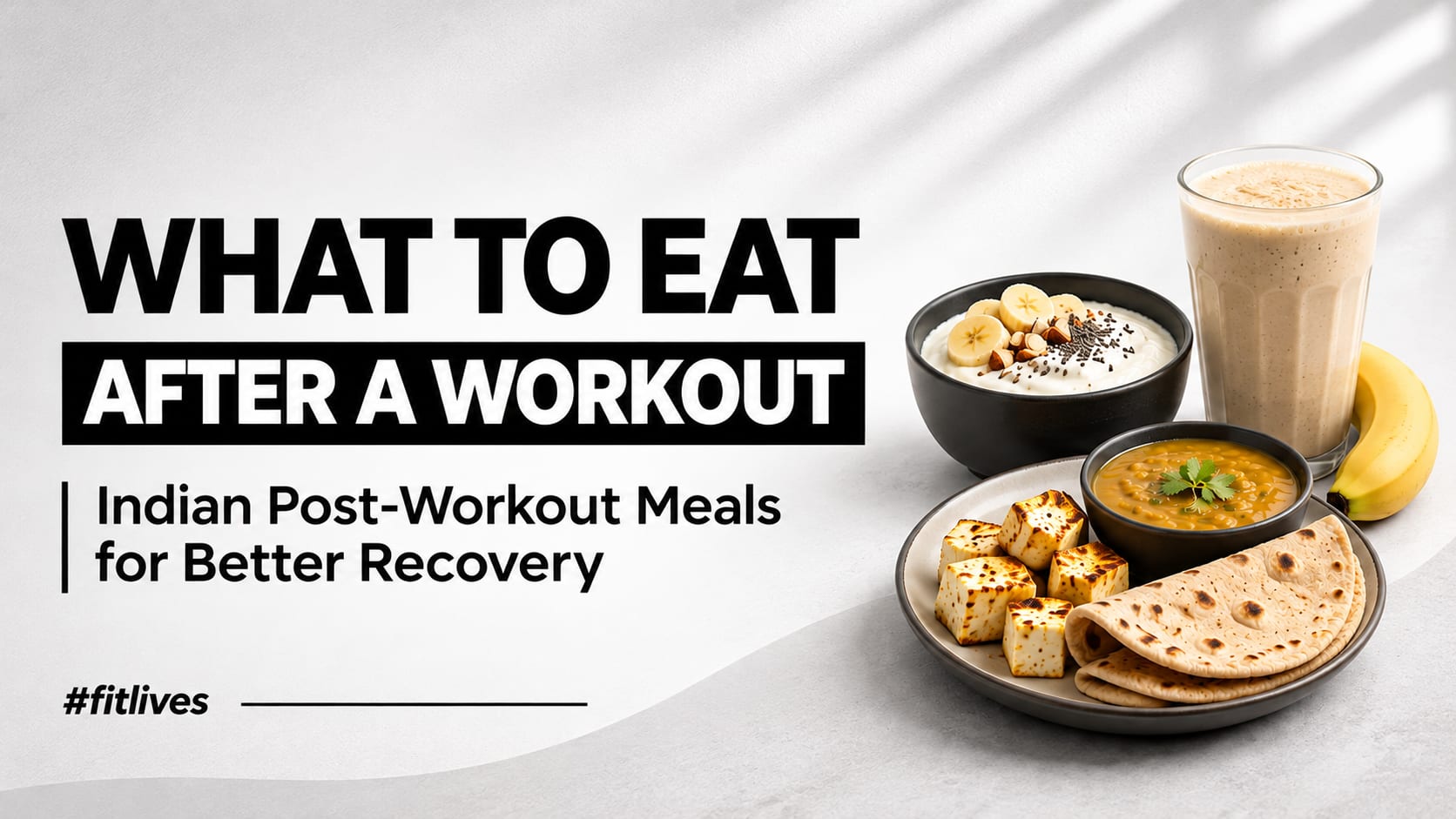
Indian post-workout meals
| Meal | Protein (approx.) | Type |
|---|---|---|
| Paneer bhurji (150 g paneer) with 1–2 rotis | 36–39 g | Veg |
| Dal-rice plate with curd | 25 g | Veg |
| Moong dal chilla with paneer filling | 29 g | Veg |
| Egg bhurji (3 eggs) with 2 rotis | 26 g | Egg |
| Chicken stir-fry with rice | 45 g | Non-veg |
| Greek yogurt protein bowl | 28 g | Veg snack |
Carbohydrates after training
Include some carbs — rice, roti, poha, fruit — especially after long or hard sessions or if you train twice a day. If you are trying to lose fat, keep carbs within your daily calorie target rather than adding extra.
What about protein shakes?
A whey or plant protein shake is a convenient way to get 20–25 g of protein if you can't eat a meal soon after training. It isn't better than food; it is just easier. Choose a reputable brand that shows third-party testing.
Rest-day eating
Keep your protein intake the same on rest days — muscle is still being rebuilt. You can reduce carbs slightly if you are much less active, but there's no need to change much.
This article is educational information, not medical advice. If you have a health condition, are pregnant, or take regular medication, consult a qualified doctor or registered dietitian before changing your diet or training.