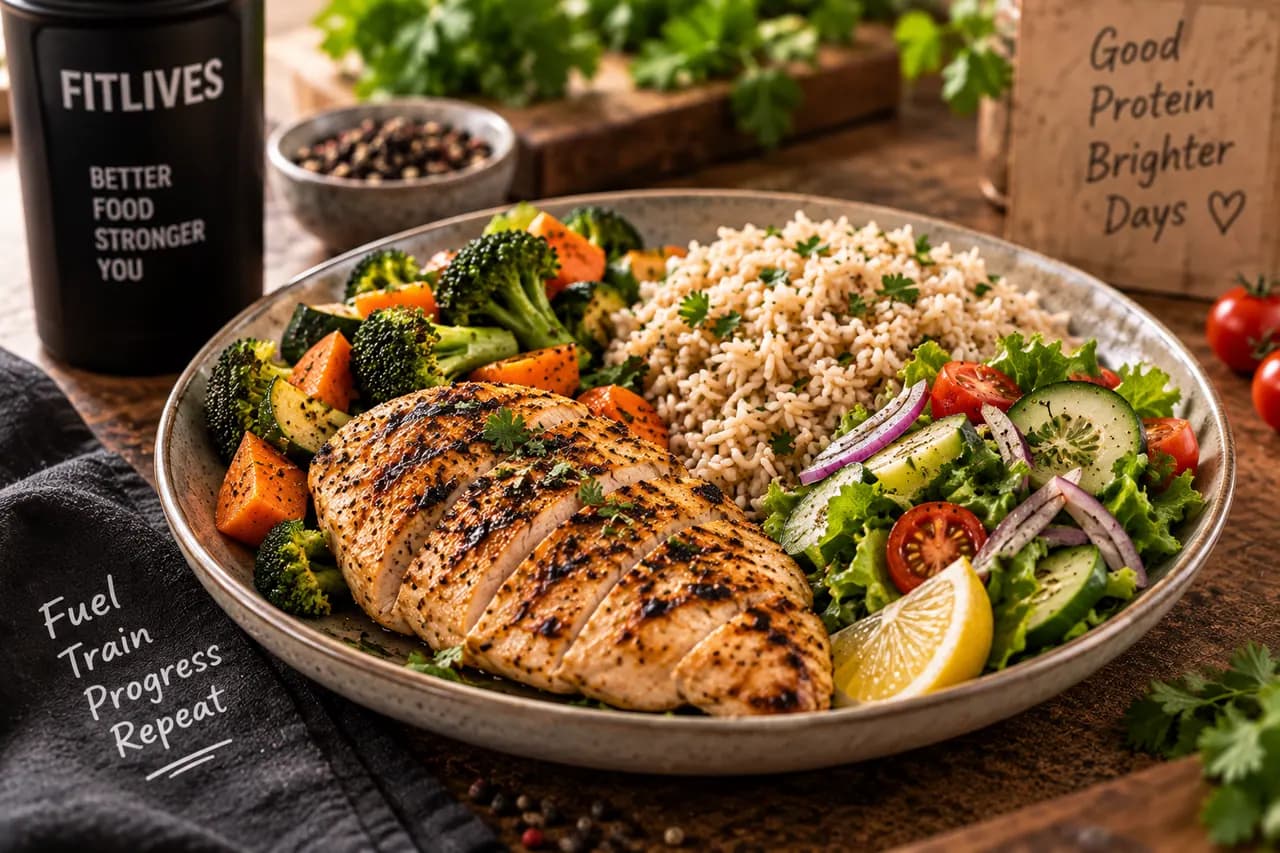
Protein is the nutrient everyone talks about and most people find confusing. Do you need 50 g or 150 g? Is dal enough? Do you need a shake? Here are the basics, in plain language.
What protein does
Protein is made of building blocks called amino acids. Your body uses them to build and repair muscle, skin, hair and organs, and to make enzymes, hormones and antibodies. Nine of the amino acids are “essential” — your body cannot make them, so they must come from food.
Protein also keeps you full longer than carbohydrate or fat, which is why higher-protein diets make weight loss easier.
How much protein you need
| Your situation | Protein per kg body weight | For a 60 kg person |
|---|---|---|
| Minimum for healthy adults (ICMR-NIN) | ≈ 0.8 g | ≈ 50 g |
| Active, exercising regularly | 1.2–1.6 g | ≈ 70–95 g |
| Lifting weights to build muscle | 1.6–2.2 g | ≈ 95–130 g |
| Losing weight (to keep muscle) | 1.6–2.2 g | ≈ 95–130 g |
| Older adults (60+) | 1.0–1.2 g or more | ≈ 60–70 g |
If you are overweight, use your goal weight or a healthy weight for your height rather than your current weight. For more detail, see how much protein you need per day and how much protein to build muscle.
How to count protein (the simple way)
- Write down what you eat in a normal day.
- Look up each food on a pack label or our food pages.
- Add it up and compare to your target.
- Find the meal with the least protein and add one protein food to it.
Handy reference amounts (IFCT 2017):
| Food | Serving | Protein |
|---|---|---|
| Chicken breast | 100 g raw | ≈ 22 g |
| Paneer | 100 g | ≈ 19 g |
| Soya chunks | 30 g dry | ≈ 15 g |
| Eggs | 2 whole | ≈ 12 g |
| Rajma | 1 katori cooked (40 g dry) | ≈ 8 g |
| Moong dal | 1 katori cooked (30 g dry) | ≈ 7 g |
| Milk | 1 glass (200 ml) | ≈ 6.5 g |
| Roti | 2 medium | ≈ 6 g |
| Curd | 1 katori (150 g) | ≈ 5 g |
For a longer ranked list, see the best high-protein Indian foods or, for vegetarians, vegetarian protein sources in India.
Animal vs plant protein
Milk, curd, paneer, eggs, meat, fish and soya contain all nine essential amino acids in good amounts. Dals and grains are each low in one, but eating both across the day fills the gap — dal-chawal and rajma-roti are naturally good combinations. Vegetarians can easily meet their needs with a little planning.
Do you need protein powder?
No. Whey or plant protein is a convenient way to add 20–25 g when food is hard to fit in, not a requirement. If you buy one, read is whey protein safe first. Creatine is a different supplement entirely — see is creatine safe.
Common protein myths
- “High protein damages your kidneys.” Not in healthy people; people with kidney disease are different. See is too much protein bad for your kidneys.
- “You can only absorb 30 g at a time.” You absorb all of it; very large meals are just less efficient for muscle building than several moderate ones.
- “You must drink a shake right after the gym.” Your daily total matters far more than timing — see protein before or after a workout.
- “Vegetarians can't get enough protein.” They can, with dairy, dal, soya and paneer at most meals.
Next step: Get your personal daily target with the protein calculator.
Explore the guide: Targets by goal, the best Indian protein foods and every protein article are in the protein guide. Compare any food in the Indian food calories and protein chart.
Key takeaways
- Protein builds and repairs tissue and keeps you full.
- Healthy adults need at least 0.8 g/kg; active people 1.2–1.6; lifters and dieters 1.6–2.2.
- Split it over 3–4 meals of 20–40 g.
- Dal, dairy, paneer, soya, eggs, chicken and fish cover it; supplements are optional.
This is educational information, not medical advice. Consult a qualified professional for personal health decisions.