You don't need imported supplements or a foreign grocery list to eat high protein in India. You need a short list of everyday foods you actually buy each week, and a rough idea of how much protein each serving gives.
Below, foods are ranked per typical serving and per calorie, using the Indian Food Composition Tables (IFCT 2017) for Indian staples and pack labels for soya chunks.
How much protein you need
ICMR-NIN sets the minimum for healthy adults at about 0.83 g per kg of body weight a day. If you train or are losing weight, 1.2–1.6 g per kg is a better target — about 85–110 g a day at 70 kg. Gains in muscle level off around 1.6 g per kg. See how much protein you need per day, or get your number from the protein calculator.
Non-vegetarian and egg proteins
| Food | Serving | Calories | Protein | Protein per 100 kcal |
|---|---|---|---|---|
| Chicken breast | 100 g raw | 168 kcal | 21.8 g | 13.0 g |
| Mutton | 100 g raw | 188 kcal | 20.3 g | 10.8 g |
| Prawns | 100 g raw, shelled | 91 kcal | 19.2 g | 21.1 g |
| Chicken thigh | 100 g raw | 200 kcal | 18.2 g | 9.1 g |
| Rohu fish | 1 piece (75 g raw) | 77 kcal | 14.8 g | 19.3 g |
| Egg whites | 4 whites | 64 kcal | 14.8 g | 23.3 g |
| Whole eggs | 2 boiled | 133 kcal | 12.1 g | 9.1 g |
Fish, prawns, egg whites and chicken breast give the most protein for the fewest calories, which makes them especially useful when losing weight. See 100 g chicken breast calories and protein and 2 eggs calories and protein for the full numbers.
Vegetarian proteins
| Food | Serving | Calories | Protein | Protein per 100 kcal |
|---|---|---|---|---|
| Paneer | 100 g | 258 kcal | 18.9 g | 7.3 g |
| Firm tofu | 100 g | ≈ 144 kcal | ≈ 17.3 g | ≈ 12.0 g |
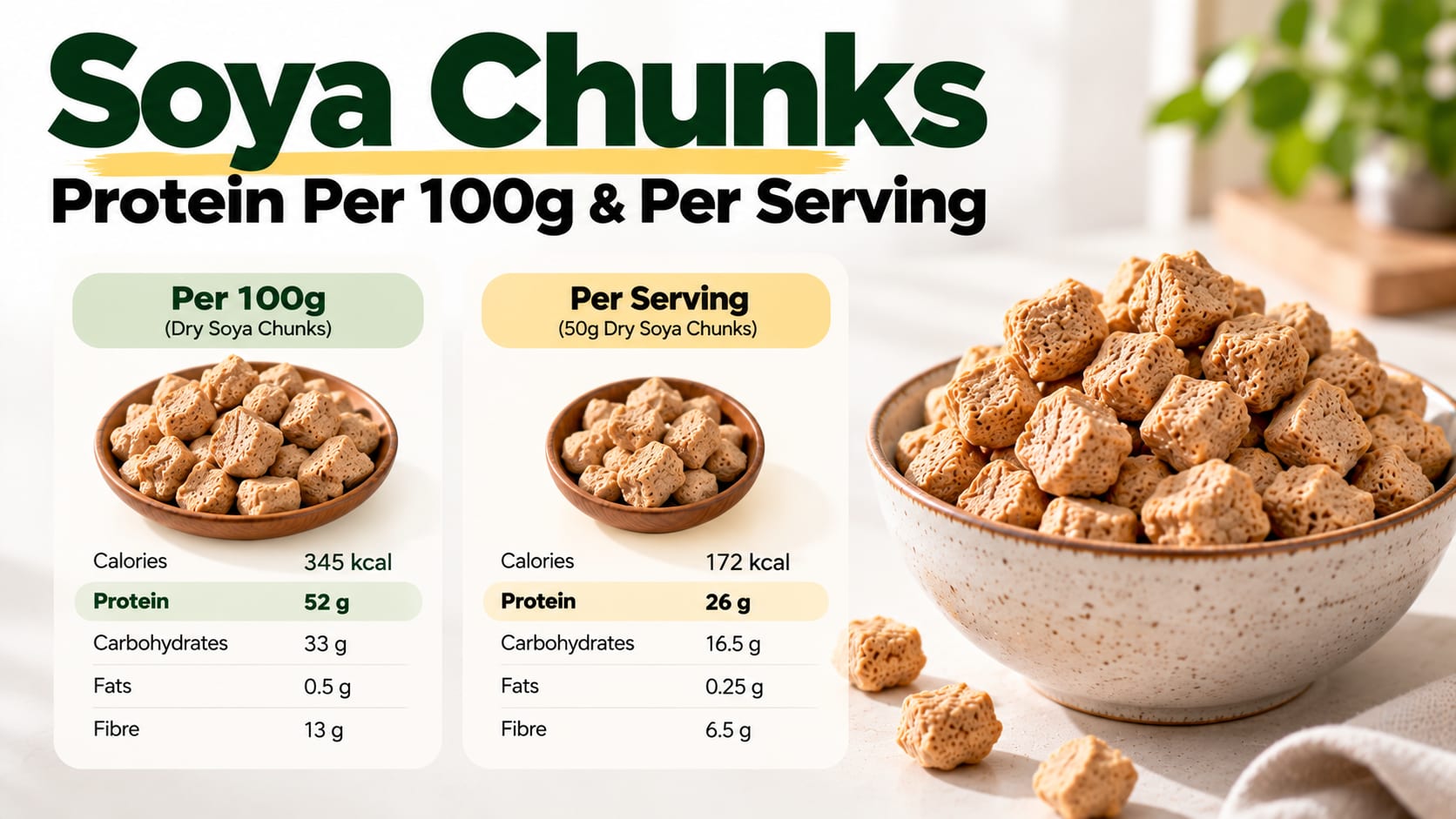
| Soya chunks | 30 g dry | ≈ 105 kcal | ≈ 15 g | ≈ 14.3 g |
| Hung curd / Greek yogurt | 150 g | ≈ 150 kcal | ≈ 13 g | ≈ 8.7 g |
| Soybean | 1 katori cooked (30 g dry) | 113 kcal | 11.3 g | 10.0 g |
| Rajma | 1 katori cooked (40 g dry) | 120 kcal | 8.0 g | 6.7 g |
| Kala chana | 1 katori cooked (40 g dry) | 115 kcal | 7.5 g | 6.5 g |
| Masoor dal | 1 katori cooked (30 g dry) | 97 kcal | 7.3 g | 7.6 g |
| Moong dal | 1 katori cooked (30 g dry) | 98 kcal | 7.2 g | 7.3 g |
| Peanuts | 30 g | 156 kcal | 7.1 g | 4.5 g |
| Milk | 1 glass (200 ml) | 146 kcal | 6.5 g | 4.5 g |
| Green peas | 1 katori (80 g) | 65 kcal | 5.8 g | 9.0 g |
| Curd | 1 katori (150 g) | ≈ 90 kcal | ≈ 4.7 g | ≈ 5.2 g |
Soya chunks and tofu are the leanest vegetarian proteins; paneer gives a lot of protein per serving but also a lot of fat. Dals and chana are moderate on their own and work best alongside dairy or soya. For a vegetarian deep-dive, see vegetarian protein sources in India and soya chunks protein.
A 100 g protein day: vegetarian
| Meal | Foods | Protein |
|---|---|---|
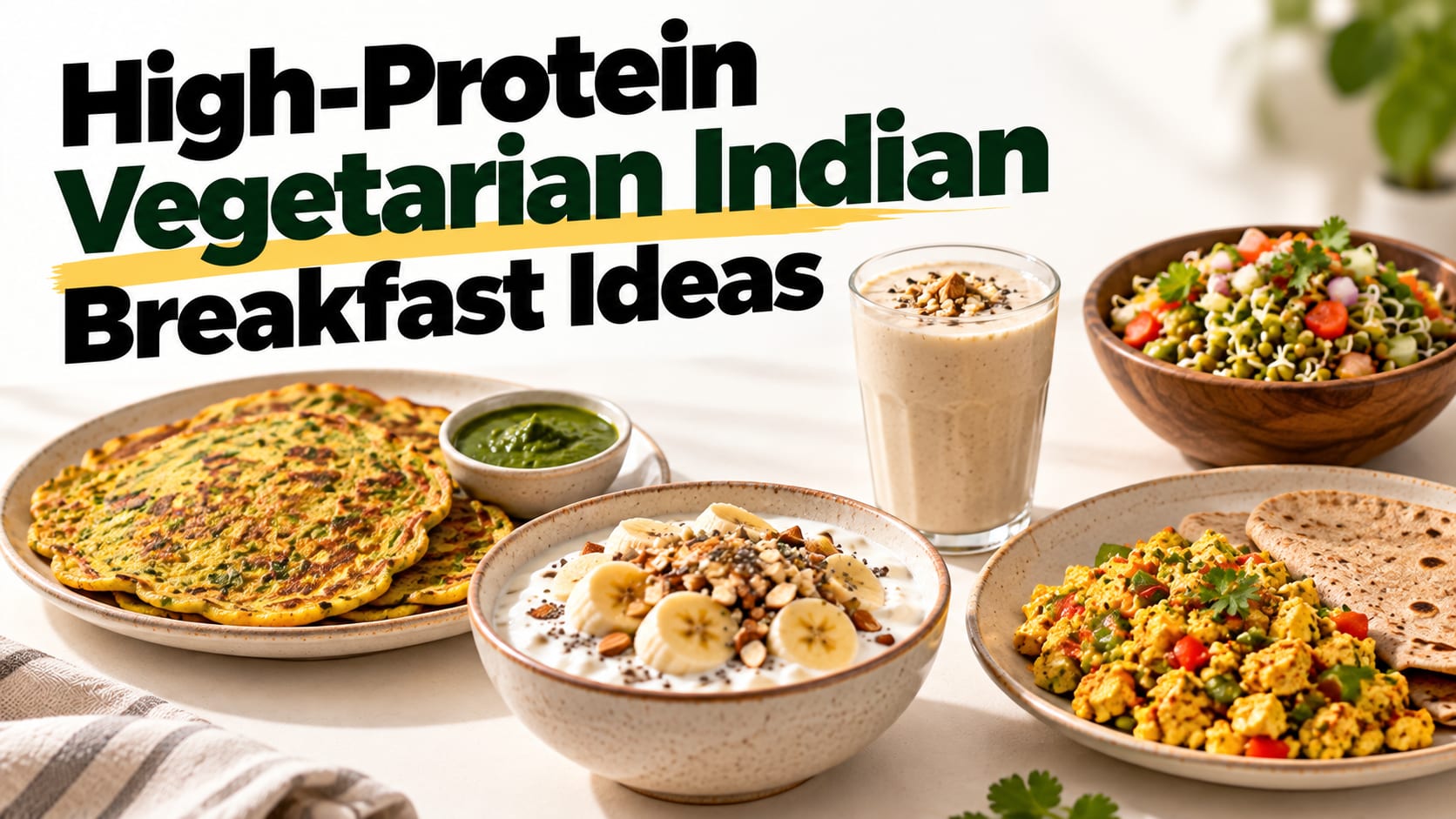
| Breakfast | 2 moong dal chillas (60 g dry dal) + mint chutney | ≈ 14 g |
| Mid-morning | 1 glass milk | ≈ 6.5 g |
| Lunch | 2 roti + 1 katori rajma + 1 katori curd | ≈ 19 g |
| Evening | Soya chunk chaat (30 g dry) | ≈ 15 g |
| Dinner | Paneer bhurji (100 g) + 1 katori moong dal + 1 roti | ≈ 29 g |
| Before bed | 150 g hung curd | ≈ 13 g |
| Total | ≈ 97 g |
A 100 g protein day: non-vegetarian
| Meal | Foods | Protein |
|---|---|---|
| Breakfast | 2 eggs + 2 whites omelette + 1 roti | ≈ 23 g |
| Lunch | Chicken curry (100 g raw breast) + 1 katori rice + 1 katori masoor dal | ≈ 33 g |
| Evening | 1 glass milk + 30 g roasted peanuts | ≈ 14 g |
| Dinner | Rohu fish curry (2 pieces) + 2 roti + sabzi | ≈ 38 g |
| Total | ≈ 107 g |
The pattern is the same in both: a real protein source at every meal, 20–40 g at a time, rather than one huge serving at dinner. Building muscle? See how much protein builds muscle. Losing weight? See protein for weight loss.
Tips for eating more protein the Indian way
- Make dal thicker and serve a bigger katori, with a little less rice or roti.
- Add curd or raita to lunch and dinner — it's an easy 5 g each time.
- Use besan or moong dal chillas instead of plain dosa or paratha at breakfast.
- Toss soya chunks or chana into pulao, sabzi and salads.
- Keep roasted chana, peanuts or hung curd as snacks instead of biscuits and namkeen.
- Watch the oil: 2–3 tablespoons in a “high-protein” curry adds 250–400 kcal.
Common mistakes
- Assuming dal and roti alone cover your protein — usually they give 30–50 g a day.
- Counting the protein in dry weight when you're eating a cooked portion.
- Leaning on paneer and peanuts only, which adds a lot of fat along with the protein.
- Buying protein bars and drinks before fixing the basics at each meal.
Worried about eating more protein? See is too much protein bad for your kidneys and, if you're considering supplements, is whey protein safe.
Compare protein foods: Head-to-head: paneer vs tofu, dal vs chicken and curd vs milk.
See the data: Every food in our database sorted per serving, per calorie and per 100 g: protein in Indian foods, ranked, or filter the full Indian food calories & protein chart.
Explore the guide: Targets by goal and every protein article are collected in our protein guide.
Key takeaways
- Per serving, chicken, fish, prawns, paneer, tofu and soya chunks give the most protein.
- Per calorie, egg whites, prawns, fish, soya chunks and chicken breast lead.
- Dals and chana give about 7–8 g per katori — great with dairy or soya, not enough alone.
- Put 20–40 g of protein at each meal to reach about 1.2–1.6 g per kg a day.
This is educational information, not medical advice. Consult a qualified professional for personal health decisions.