
How to build muscle: the fundamentals
Pillar hub · Educational content · Not medical advice
How to build muscle in 5 steps
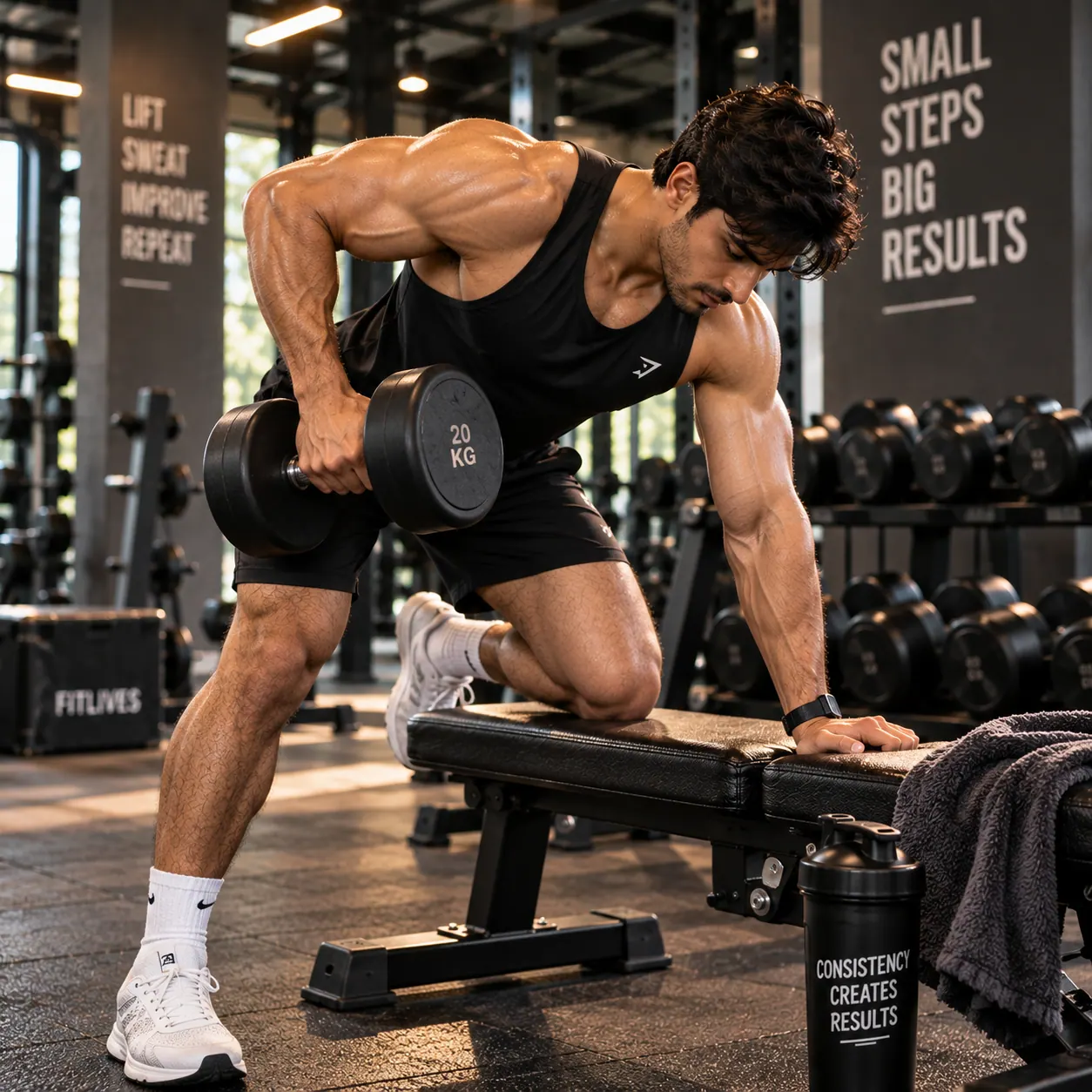
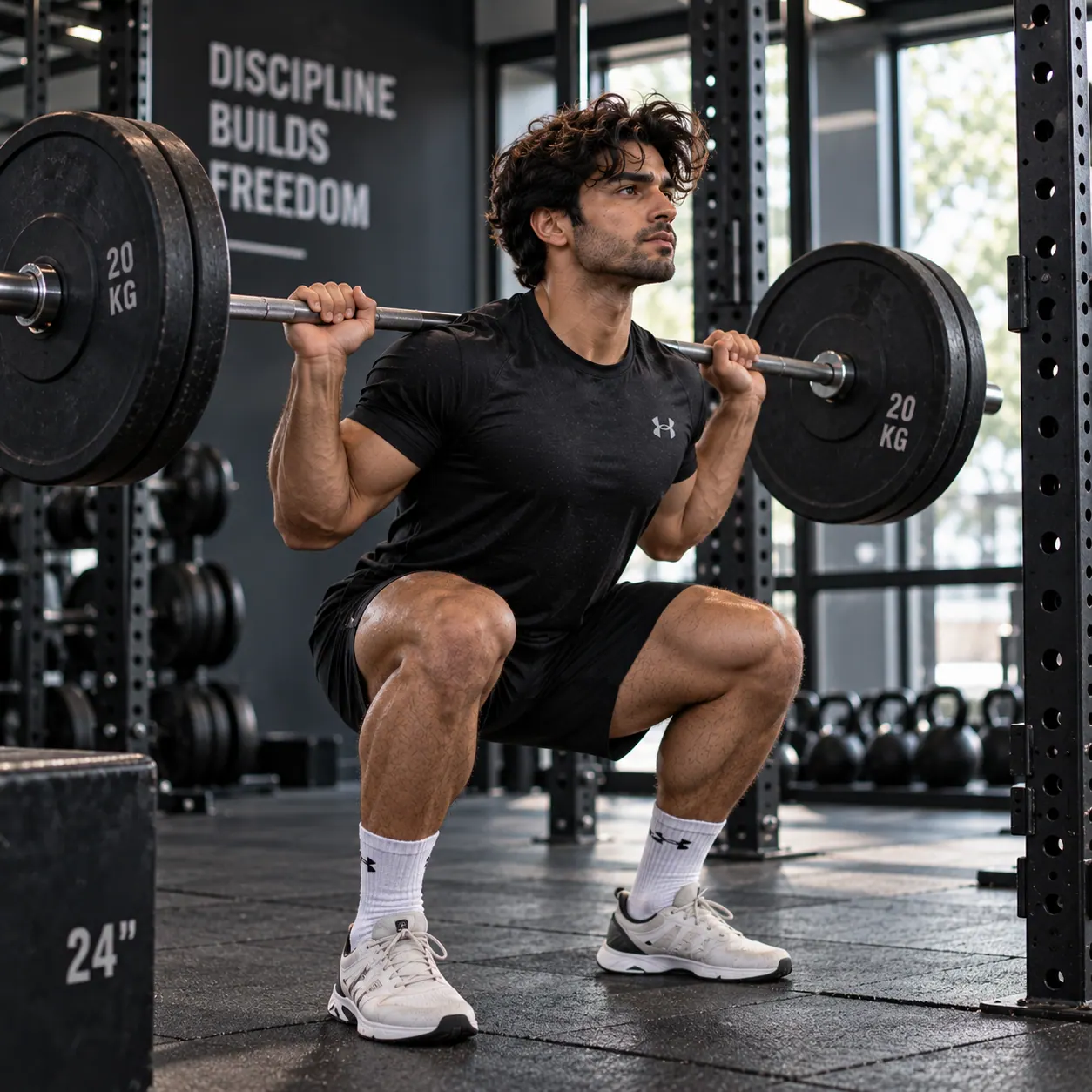
Train each muscle hard, twice a week
Muscle grows in response to challenging sets taken close to failure. Most people do well with about 10–20 hard sets per muscle group per week, split over two or more sessions. Sets of roughly 6–30 reps all work if the last few reps are genuinely hard. Browse the exercise library for movements by muscle group.
Use progressive overload
Over weeks, do a little more: an extra rep, a small jump in weight, or an extra set. This is the single most important habit in any program; our guide on what progressive overload is shows how to apply it safely, and the one rep max calculator helps you pick working weights.
Eat enough protein
Around 1.6–2.2 g of protein per kg of body weight a day, spread over three to four meals, supports muscle growth for most lifters. Get your target from the protein calculator and read how much protein to build muscle for the evidence.
Eat enough total calories
Muscle is easiest to build at maintenance or in a small surplus of about 200–300 kcal a day. Find your maintenance with the TDEE calculator. A large “dirty bulk” mostly adds fat you will later need to lose.
Sleep, recover and be patient
Muscle is built between sessions. Aim for 7–9 hours of sleep and avoid training the same muscle hard on consecutive days. Progress is slow but steady; see how long it takes to build muscle for realistic timelines.
Progressive overload · Protein · Recovery

A muscle building diet on Indian food
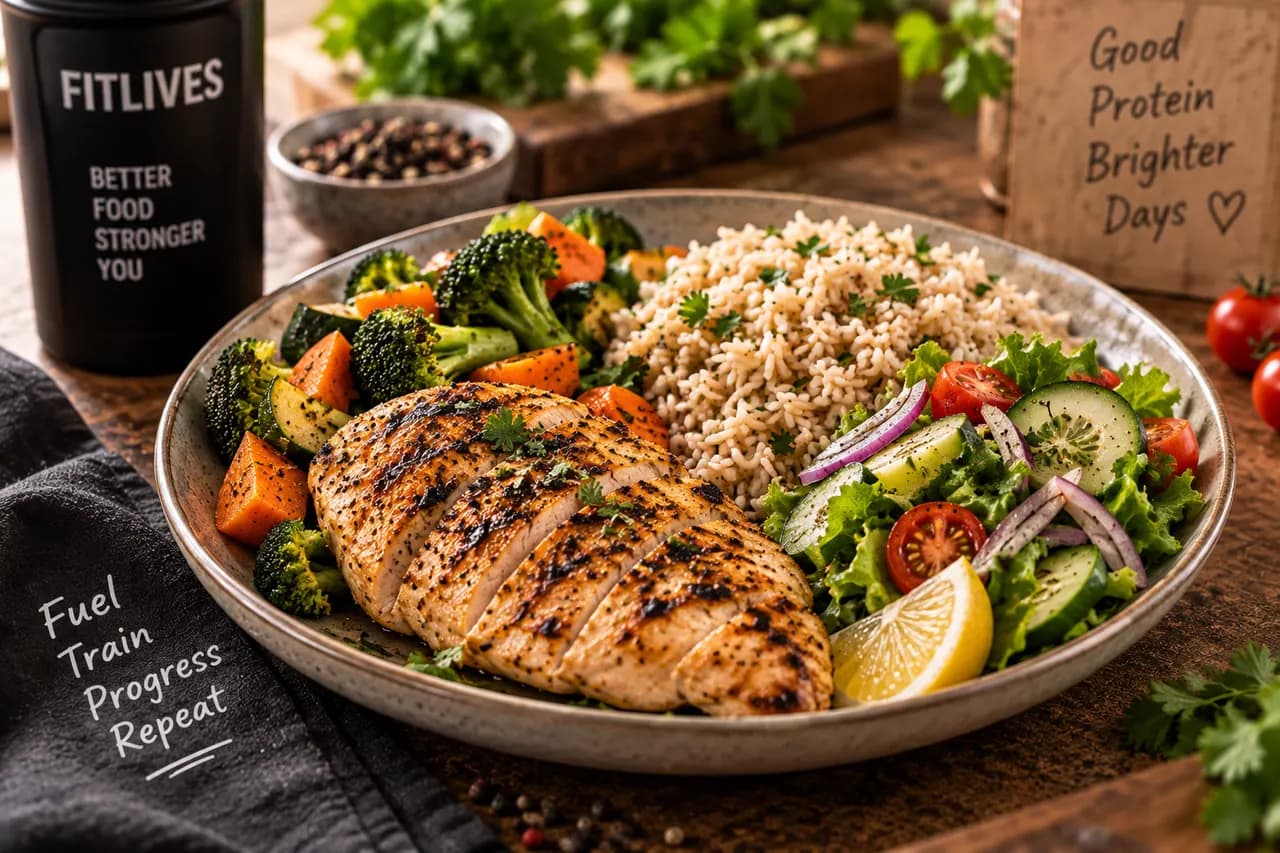
The main challenge on a typical Indian diet is protein, not calories. Dal and roti alone rarely get a lifter to 1.6 g per kg, so plan a clear protein source into every meal: paneer, curd or Greek yogurt, eggs, chicken or fish, soya chunks, tofu, or a scoop of whey if it suits your budget.
A simple pattern is three main meals and one or two protein-rich snacks, each with roughly a quarter of your daily protein. Our beginner gym diet plan lays this out with Indian meals, and the best high-protein Indian foods compares sources by protein per serving. Supplements are optional; creatine monohydrate has the strongest evidence — start with is creatine safe, then how much creatine per day, whether to load, creatine for women, and monohydrate vs HCl.
All muscle building guides
Every fitlives muscle building article, grouped by topic: training principles, nutrition and realistic timelines.
Next steps
Muscle building FAQs
Quick answers from this guide. Educational information only — not medical advice.
Visible changes usually take weeks to months of consistent training, progressive overload, enough protein and calories, and recovery. Beginners often progress faster than advanced lifters.
About 10–20 hard sets per muscle group per week works for most people. Beginners can grow well on the lower end; add sets gradually only if progress stalls and you are recovering well.
A modest calorie surplus can support faster gains, but beginners can build muscle near maintenance. Large surpluses mainly add fat.
Protein provides amino acids for repair and growth. Around 1.6–2.2 g per kg of body weight a day suits most lifters. Pair it with hard training — protein alone does not build muscle.
Yes. Paneer, curd, milk, dal, chana, soya chunks and tofu can cover your protein needs when portions are planned across the day. Whey or other protein powders are optional conveniences, not requirements.
Still have a question? Contact us.
Educational information only. See our medical disclaimer.